

Whale Watching
My aunt who retired early to pursue a marine biology internship: "... the greatest changes always came from when I said ‘yes’ to something."

When my aunt, Rose Anne Everson, was 62 years old she decided to quit her job to do a whale internship across the ocean.
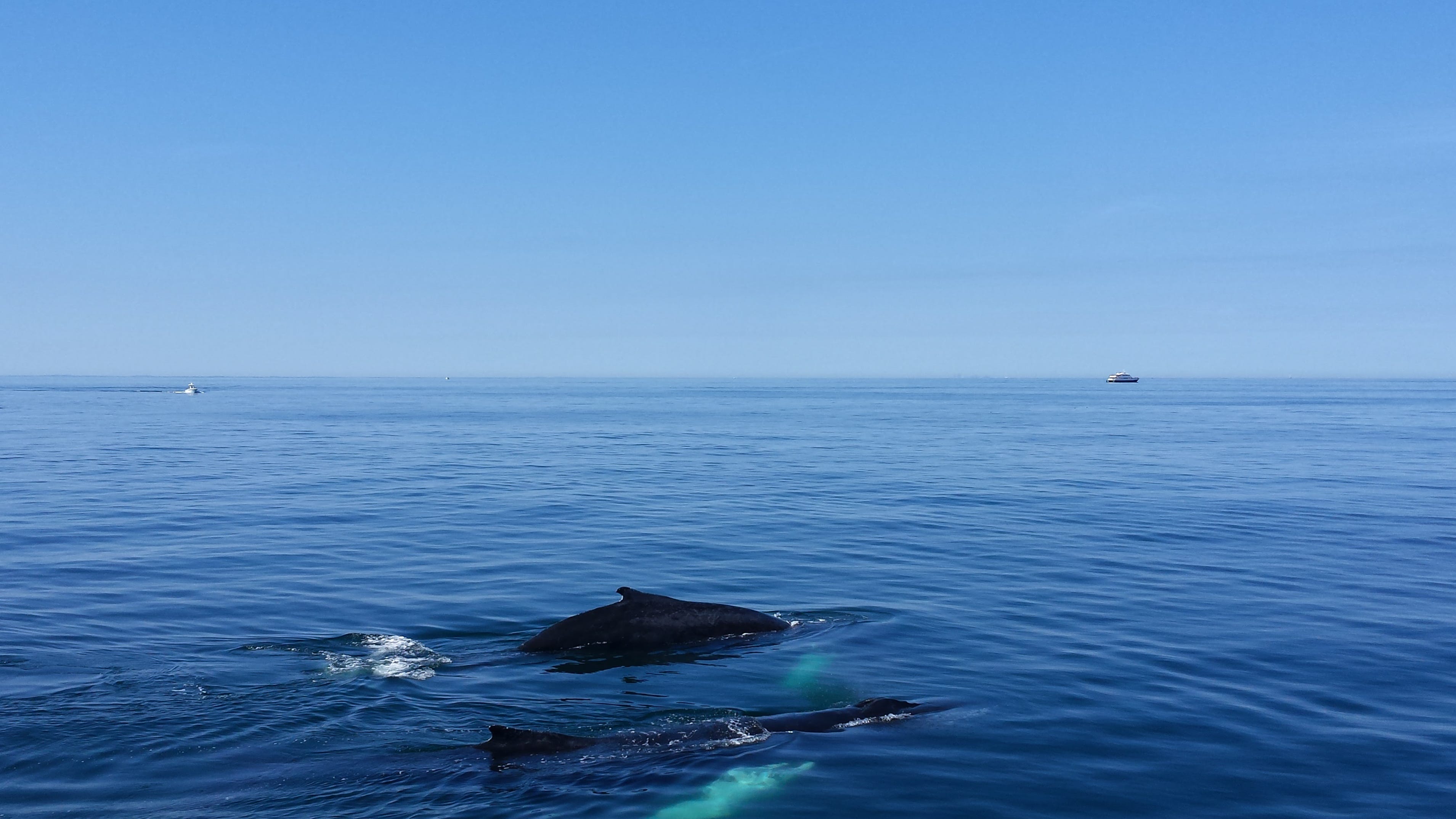
Well, technically, she didn’t quit — she retired early because her full-time insurance job wouldn’t let her take a sabbatical. And the internship was a volunteer program with the World Cetacean Alliance in both Brighton, England and Gloucester, Massachusetts. When asked over the phone by the Executive Director how she felt about being the oldest intern of the bunch, she responded, “It doesn’t really bother me because I’ve worked with a lot of young people. Whatever I can teach them, they can teach me.”
My aunt Rose Anne has always had a celestial connection to the ocean (a trait which definitely runs in our family). Cetaceans — that is, whales, dolphins, and porpoises — have fascinated her “since birth.”
“I say that facetiously. I don’t remember a time in my life when I wasn’t fascinated by whales and dolphins and the ocean… They are connected to us in lots of ways. They swim in the water, and yet they breathe air.” The ocean itself has always made her curious. Standing on a beach in Mexico or a hill in a seaside city has an intrinsically calming effect on her. Rose Anne loves the vastness of the ocean, its openness and endless possibilities. “I think I wanted to be a mermaid.”
At her insurance company in Illinois, Rose Anne worked on the North American catastrophe team, putting in overtime hours whenever there were major disaster events such as earthquakes or hurricanes. For a while, she was applying to internal jobs hoping to be promoted, but wasn’t getting anywhere. By the time she discovered the World Cetacean Alliance’s advertisement for internships, she already had the feeling her road in insurance was ending. She still remembers exactly where she was when she first read her acceptance to the voluntary program: at a West Elm in the mall buying sheets. “I had actually been in LL Bean and I had just bought a tote bag with whales on it. I then walked over to West Elm … as I was leaving with the sheets, I saw I had an email from them [on my phone]. I was so nervous, but I opened it and it said yes.”
A few days later, she spoke to her boss to request a leave of absence. “Are you going to quit if you don’t get it?” her boss asked. Rose Anne offered up no additional answers — just asked her if it would be possible. The following week, her request was denied. Disappointed, she remembered all of the 14-hour days she worked when she first started in the aftermath of Hurricane Katrina, her subsequent 12 years of dedication to the company’s disaster relief efforts. On the drive home, she pulled up to a stoplight and the question came to her like divine intervention. “Can I retire?”

Rose Anne first learned about the magic and allure of whale watching while on vacation in Cabo San Lucas, Baja California, Mexico. There, she met a marine biologist named Frankie who showed her photos of his previous excursions out at sea — “magnificent pictures of whales.” She asked how he was able to get so close to them, and he told her about the ethical whale watches he’d frequently participate in, which led her to learn about Cabo Trek. Founded by Austrian diver Philipp Moser, Cabo Trek’s mission is to promote a wider understanding of the ocean, as “one of the leading responsible whale watching operations in all of Los Cabos, maintaining a safe distance both for the whales, their calves, and our customers.” Baja California Sur has the largest population of humpback whales in the Pacific Ocean, peaking in the winter months from November to April. Maintaining a strong connection to nature creates a more informed and symbiotic relationship between us humans and whales, which they hope will lead to a convalescent desire to protect their habitat.
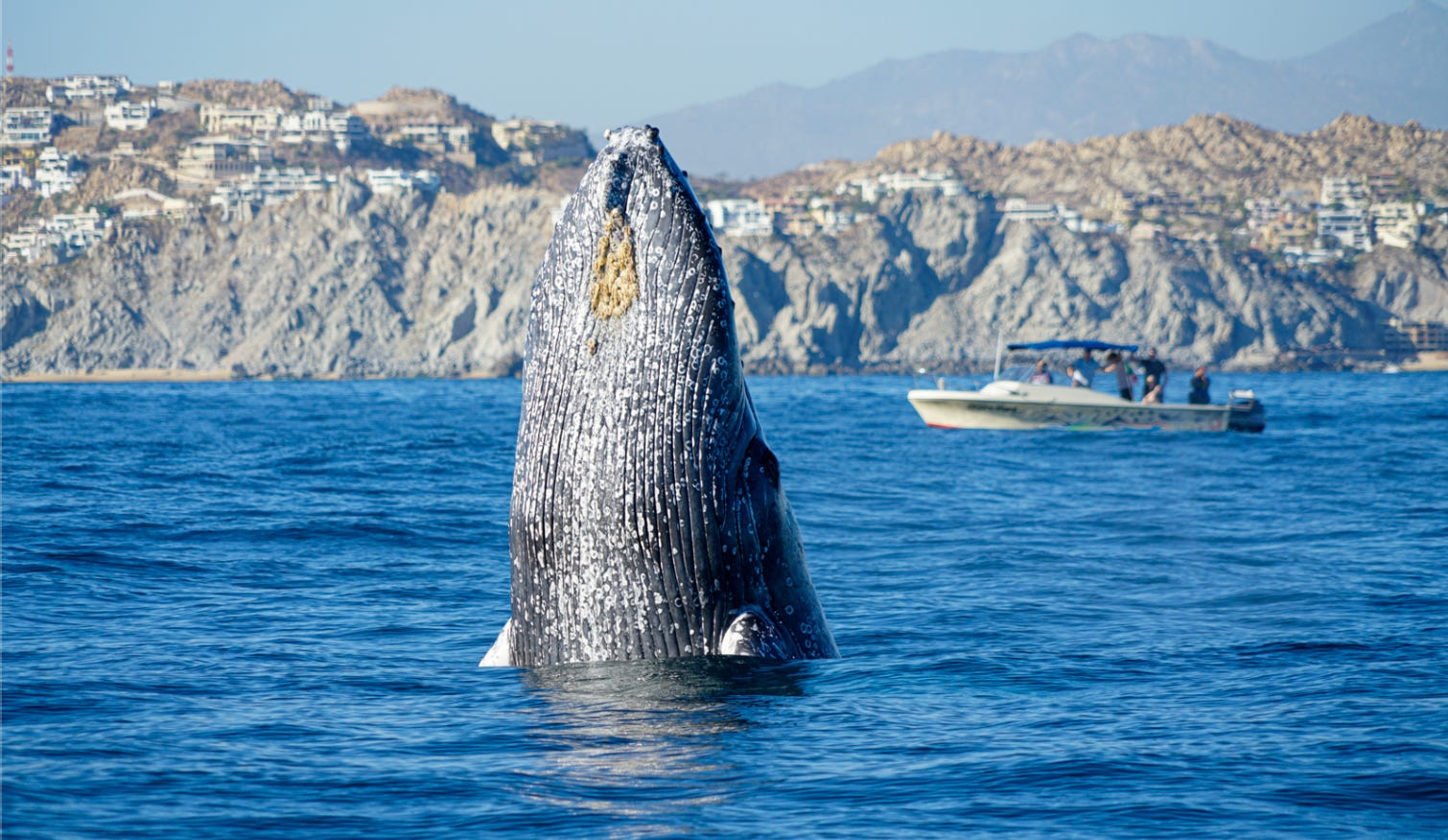
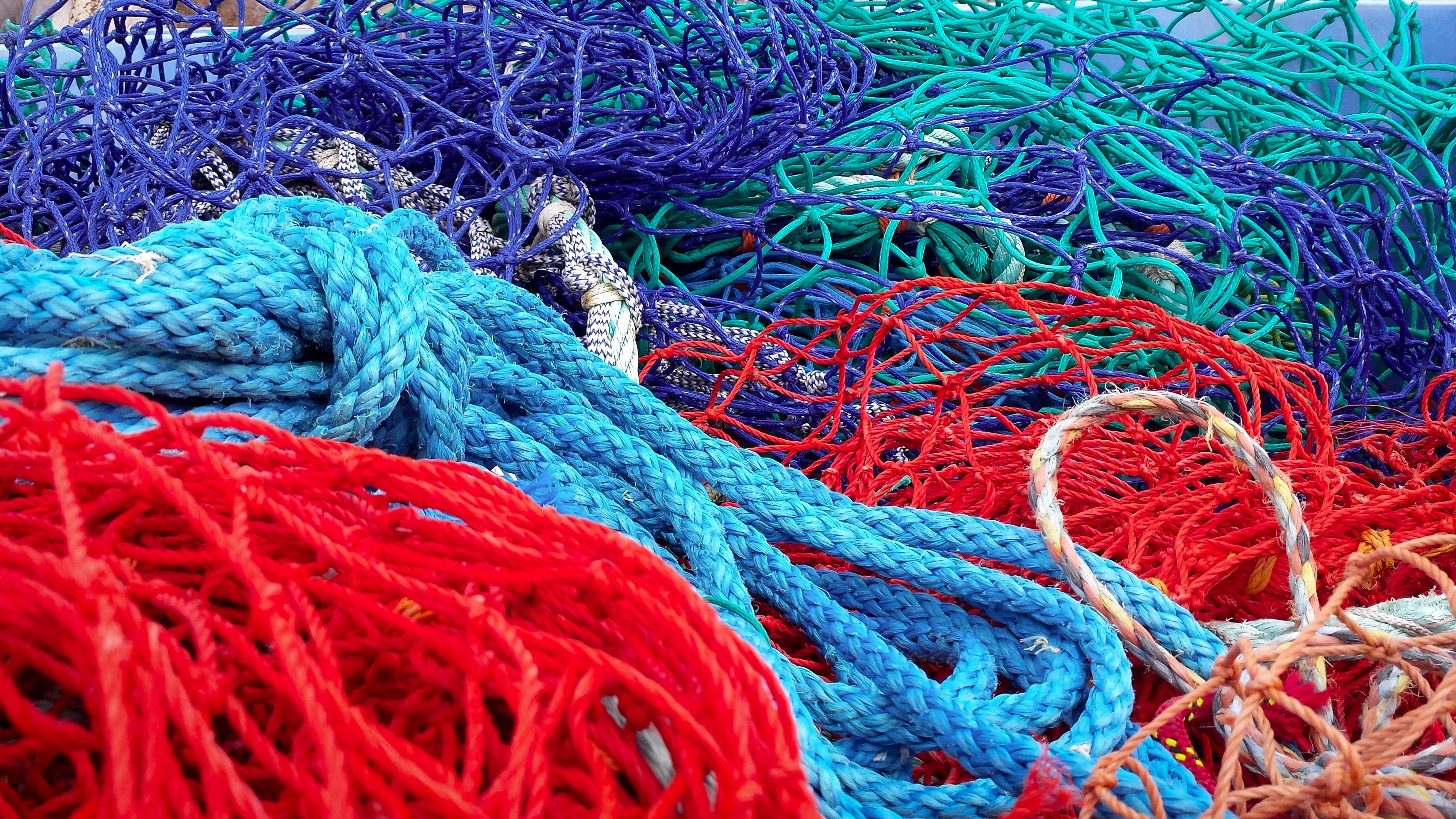
Rose Anne stayed in contact with Frankie and Philipp for years, visiting Cabo Trek whenever she was back in Mexico. It was on the Cabo Trek Facebook page where she first learned about the World Cetacean Alliance (WCA), and, later on, their opening for voluntary interns in various locations around the world. Following a feeling of butterflies in her gut, and since there was no requirement to be a marine biologist, she decided to apply. She then wrote an essay about her upbringing in California, her always living near the water, its life force and calming effect, and her affinity for protecting whales — the magnitude of their beauty. Afraid to hit “send”, she didn’t submit her application until the day it was due. She was accepted to first work as an intern with the WCA in Brighton for one month, helping with whale and dolphin boat tours and creating marketing materials to raise awareness of the danger posed by netting in the ocean.
For the whale watches, Rose Anne and her fellow interns developed teaching tools to use on board. Their tool for teaching children about the harm netting causes to ocean wildlife was putting a rubber band around their fingers on one hand, and telling them to try removing it without using their other hand. This is similar to how rubber and plastic get caught on a dolphin or whale’s fin; if it doesn’t get removed, they can’t swim to the surface for air, and they will drown. They also taught customers about the history of fishing nets, and how they used to be made of rope that fishermen could easily cut and mend when broken, but are now made of plastic which more often than not just gets dumped into the sea. Entanglement in this abandoned fishing gear, known colloquially as “ghost fishing gear”, is the leading cause of death for minke whales in UK waters according to the WCA. The plastic that makes up most fishing gear is also durable, sometimes lasting upwards of 600 years.
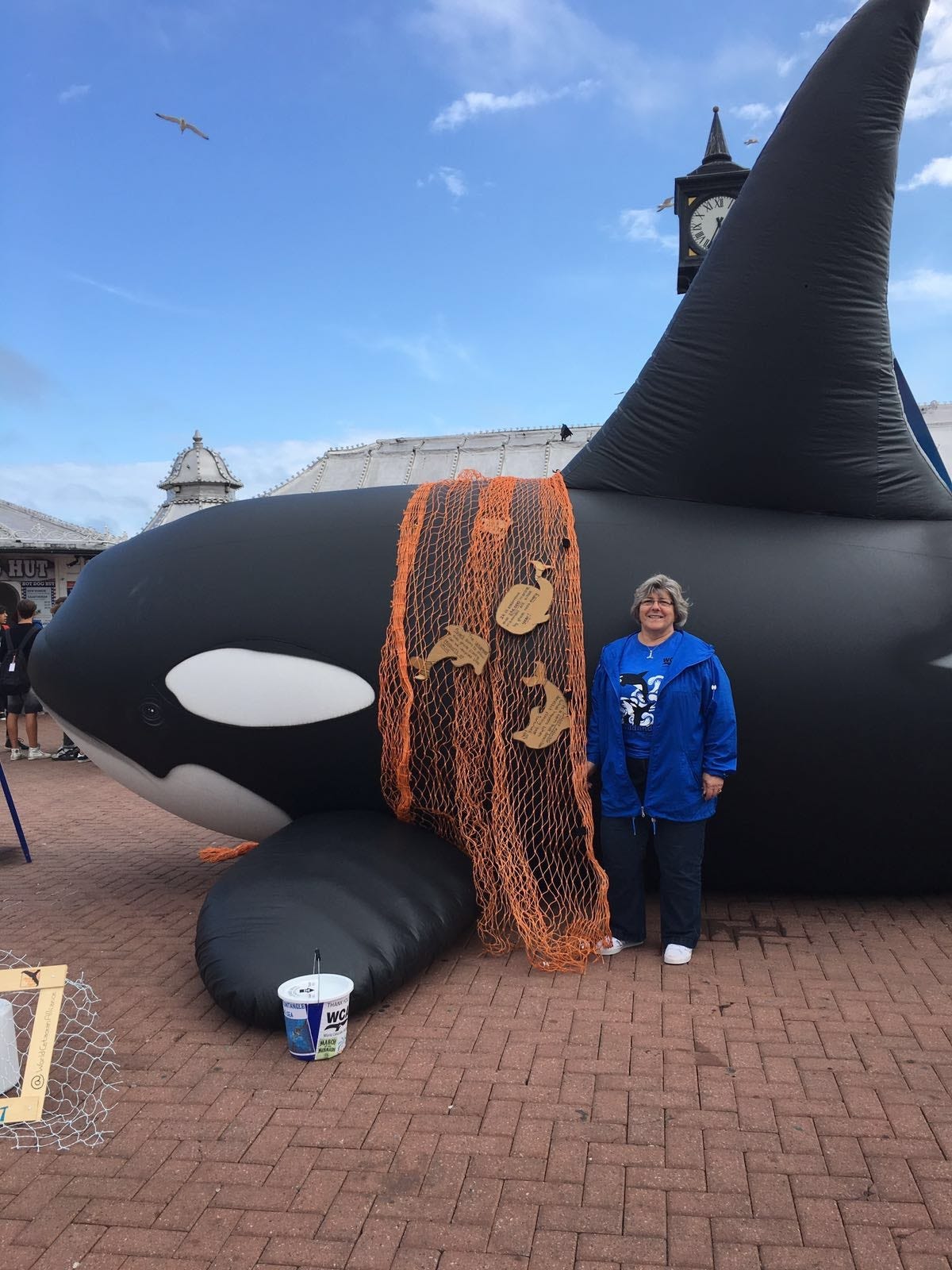
A particularly fun activity Rose Anne took part in was organising a fundraiser on Brighton Palace Pier involving a huge blowup orca. Their goal was to leave customers and the community feeling more knowledgeable about environmental issues threatening our oceans, and more caring toward the whales and dolphins living just under the surface. Some of her favourite memories from Brighton, though, were moments spent by the ocean with others from the program — such as their daily “tea and sea” sessions, which were self-explanatory: together they would sit on the rocks with cups of tea and look out at the sea.
Rose Anne’s fellow interns all came from different backgrounds, with most studying marine biology or another related subject. One intern, Kevin, was a musician who was between gigs and wanted to do something different. He’s now a music teacher living in Hong Kong. Her closest friend from the program was a 19-year-old English intern named Eva Prendergast, who will soon continue her cetacean research with National Geographic Expeditions on a ship in Antarctica. The age difference didn’t really matter to Rose Anne — she has nieces and nephews (like me) who are around Eva’s age. “She was gregarious, just this bigger-than-life person. She was up for anything. I think she challenged me to just have fun. She helped me get through my anxiety about what I was doing in a very short time. I just felt a kinship toward her right away.” When the internship in Brighton ended, Eva joined Rose Anne at their next WCA stop: Cape Ann Whale Watch in Gloucester, Massachusetts.
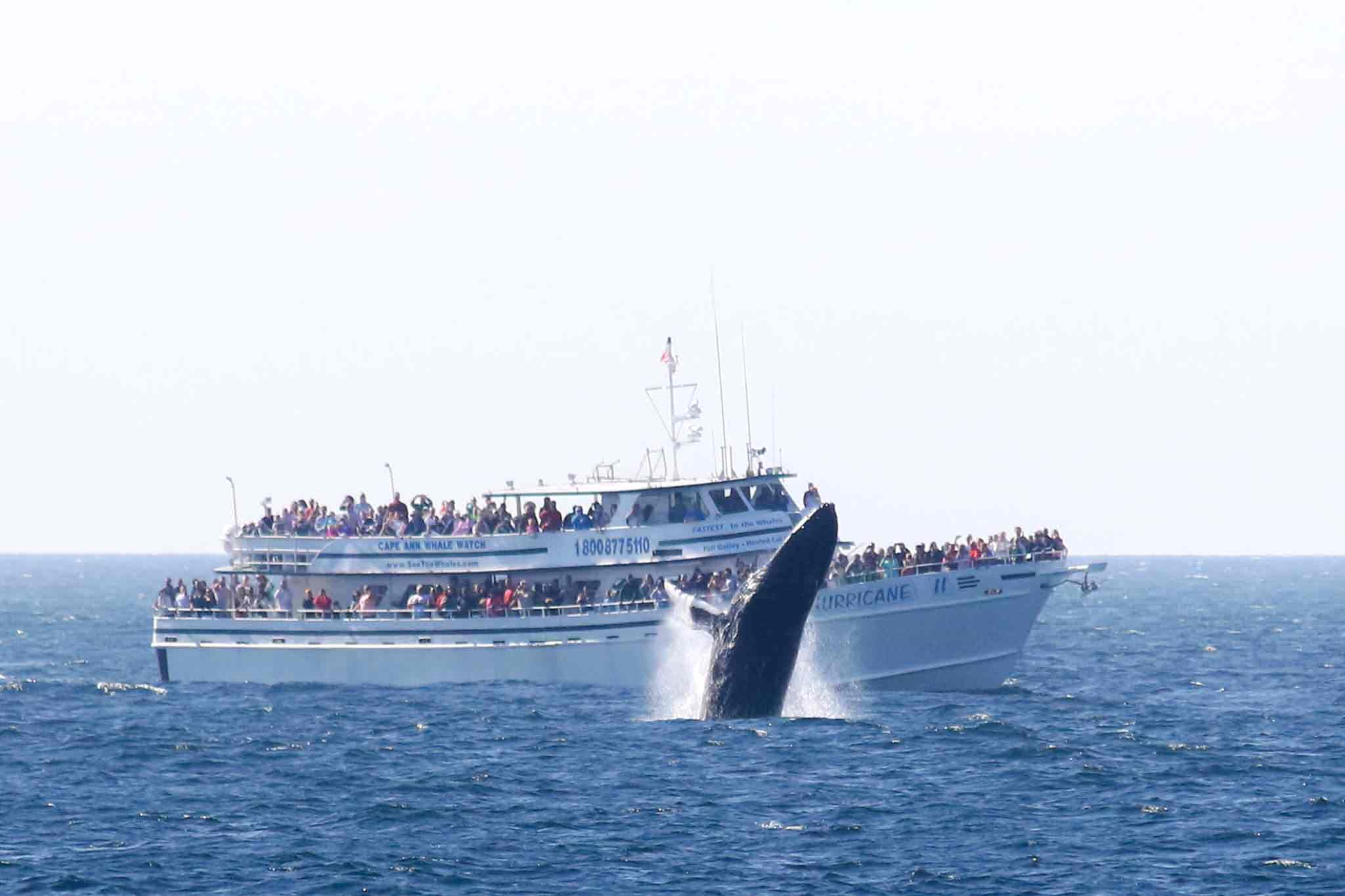
The day-to-day tasks of the Gloucester internship were very different from Brighton. Like Cabo Trek, Cape Ann Whale Watch is also a WCA certified responsible whale watching operator. One central purpose of the interns’ work was to inform customers on boat tours that they were in “the whales’ home” now, a home wherein the whales were under no obligation to put on a show for them. Rose Anne continued her creation of teaching tools and marketing materials with the other interns, the focus of which stemmed from a project she helped with in Brighton — a cartoon they created together called “Netty the Net”, the story of a little net who doesn’t realise how much damage he’s done to an orca. In Gloucester, this project developed into the “Net Effect” campaign, for which Rose Anne regularly wrote informative blog posts. In one 2016 blog post titled “The Reach of Ripples”, she writes, “... I discovered how truly amazing and humbling it has been to witness that moment when a fellow human being realises life on land is inextricably connected to life in our oceans.” The first boat of the day left at 7:45 a.m. every morning, and it was Rose Anne’s job to gather data and document anomalies or other interesting happenings during each whale watch. Daily conversations with tourists typically had to do with environmental damage, climate change, why we should care about marine wildlife, and what we can do stop the spread of ghost fishing gear in our oceans. “We are the only sentient lifeforms on the planet polluting everything,” as Rose Anne put it.


Although I remember my mom and I being excited for my aunt when she got this internship, I still asked her if she felt supported by friends and family when taking such a huge leap. “The comment I got most often was how brave I was,” she said. Her husband Robbie’s stance was simply that he couldn’t tell her not to do it — it was up to her. Other family members had a lot of questions, but Rose Anne never felt unsupported. (I was in high school at the time, and I think a big reason why I personally felt delighted was because Gloucester was only a couple of hours away, meaning she was able to visit me a few times that autumn.)
Several years on, Rose Anne is sure this internship still affects her now. “There are long-term effects to doing something way outside of your comfort zone.” Her work with the WCA made her realise how transferable her life skills are in other areas. On the final day of the internship, she completed an exit interview with her director, where she told him she’d learned far more about the whales than she ever expected. She felt as though she was so naive before the internship — now when she thinks back on it, she feels inspired by her accomplishment. “I survived it.” She also learned there are people everywhere educating the public about cetaceans, even in the middle of the country where she lives. “Just because you’re not near the ocean doesn’t mean you shouldn’t know how the ocean works. Just because we’re landlocked doesn’t mean we shouldn’t care.”
I also asked Rose Anne if she had felt afraid before embarking on this internship, choosing to go out on a limb and retire early. Her response reminded me why I’ve always appreciated her advice on life in general: “Being adaptable means saying ‘yes’ to where you are. Saying ‘yes’ brings things into consciousness… When I look back at the totality of my life, the greatest changes always came from when I said ‘yes’ to something.” Rose Anne also mentioned something her therapist and spiritual advisor told her once: “Sometimes excitement or anticipation for something new gets confused with fear.”
Before departing for Brighton almost a decade ago, Rose Anne checked in with herself to understand what exactly she was feeling, before determining it was excitement after all. She has since come to the conclusion that this decision was a moment which changed her life forever. “I can’t imagine not having done it.”